
Single vs. Bunk Beds: Optimizing University Dorm Room Layouts
When planning the interior architecture of massive campus housing, the debate between individual resting units and tiered structures dictates the entire facility's capacity. Securing premium inventory directly from a reputable bunk bed manufacturer is crucial for long-term success. Administrators must carefully analyze floor plans to determine if independent, ground-level units or heavy-duty bunk beds will provide the highest return on investment. This complex spatial mathematics involves weighing occupant comfort against maximum density, and selecting the correct commercial furniture configuration is the definitive key to resolving this dilemma.
1. The Spatial Mathematics of Campus Housing
Real estate within an educational complex is exceptionally expensive. A standard ground-level bed consumes approximately two square meters of valuable floor area. If a facility manager attempts to place three separate frames into a standard dormitory room, the available space for desks, wardrobes, and social interaction instantly vanishes. The room becomes claustrophobic, leading to decreased student satisfaction and negatively impacting academic performance.
Elevated sleeping platforms change the structural equation entirely. By utilizing the vertical airspace, administrators reclaim up to 50% of the room's horizontal footprint. This newly acquired space allows residents to create dedicated study zones. For an institutional buyer, doubling the occupancy of a room without physically expanding the building's perimeter represents an astronomical financial advantage.
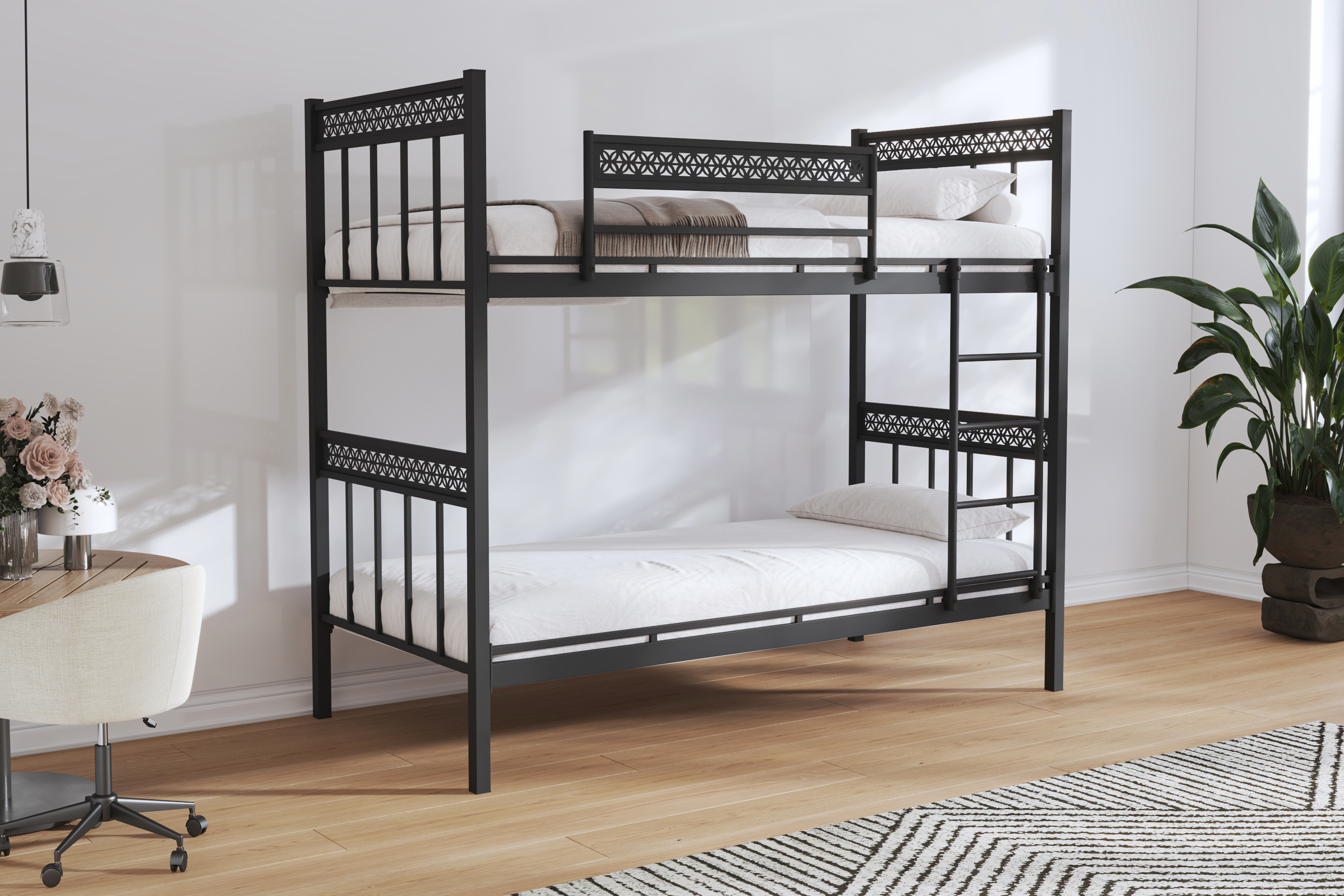 Modular frameworks like the Motif series allow administrators to convert elevated units into independent floor-level platforms based on room dimensions.
2. When to Deploy Single Sleeping Platforms
Despite the high-density benefits of vertical expansion, certain architectural scenarios demand ground-level resting structures. Private suites for Resident Assistants (RAs), specialized accessibility rooms, and high-end boutique quarters often utilize independent frames. In these environments, privacy and unrestricted mobility take precedence over maximum occupancy.
Furthermore, dynamic housing sectors benefit immensely from convertible architecture. As a primary producer, we engineer versatile systems like the Armoni and Motif series. These intelligent frames utilize threaded, screw-secured insert nipples. This mechanical advantage allows a massive elevated structure to be swiftly unbolted and transformed into two identical, highly stable independent platforms. If a room's demographic shifts from multiple scholars to a single occupant, the facility management can adapt the furniture instantly without purchasing new inventory.
"Convertible sleeping architecture is the ultimate safeguard against demographic unpredictability. It grants facility directors the agility to transition between high-density configurations and private, ground-level layouts overnight."
3. The Ultimate Compromise: Convertible Sofa Systems
Sometimes a room is too compact for separate study chairs but still requires multi-functional utility. The Futonmax architecture is a groundbreaking solution for compact studios. During the day, the lower tier operates as an ergonomic seating lounge, perfect for reading or hosting peers.
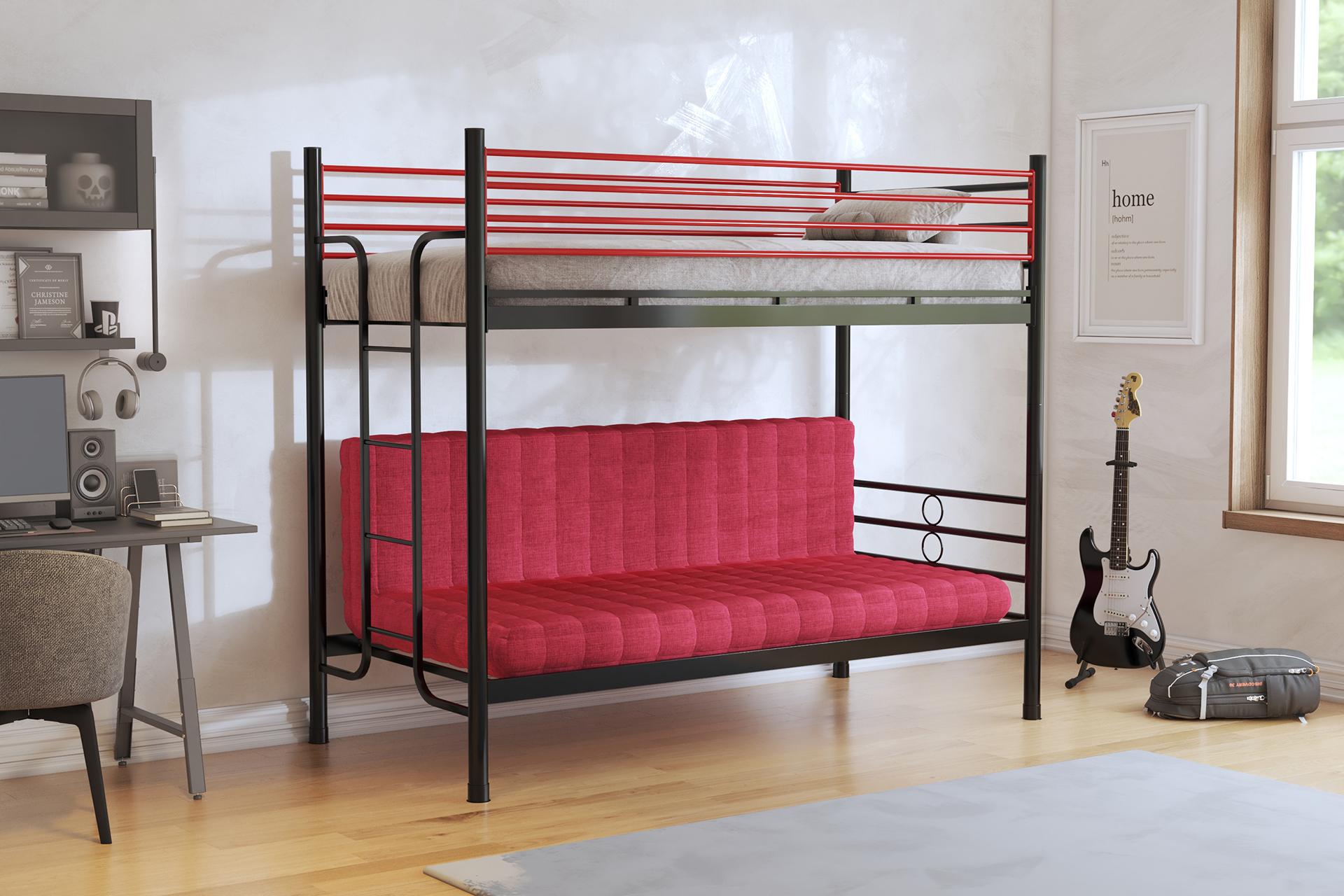 The Futonmax system seamlessly transitions from a daytime seating lounge to a secure orthopedic sleep surface.
When night approaches, the high-density foam cushions fold completely flat, transitioning instantly into a spacious orthopedic bed. This hybrid functionality eliminates the necessity of buying secondary seating furniture, aggressively protecting the operational budget while maximizing every square centimeter of the living space.
4. Engineering Unyielding Commercial Skeletons
Whether a university selects single units or towering tiered systems, the metallurgical core must be indestructible. Retail furniture relies on brittle materials that fracture under dynamic stress. Operating an automated factory, we exclusively forge our profiles from high-tensile, cold-rolled DKP DC01 CR alloys. This premium material possesses the necessary elasticity to absorb sudden kinetic impacts without snapping or permanently deforming.
For elevated structures, the geometric thickness of the columns dictates the lifespan of the asset. The Santiye and N747 lines deploy monumental 40x40 mm square pillars, offering supreme resistance against lateral torsion. Conversely, premium hybrid models like the Daisy and Woodex utilize massive 51Ø circular columns. With wall thicknesses reaching up to 1.50 mm, these deep profiles guarantee an extreme weight capacity of up to 200 kg per individual tier, effortlessly supporting adult scholars.
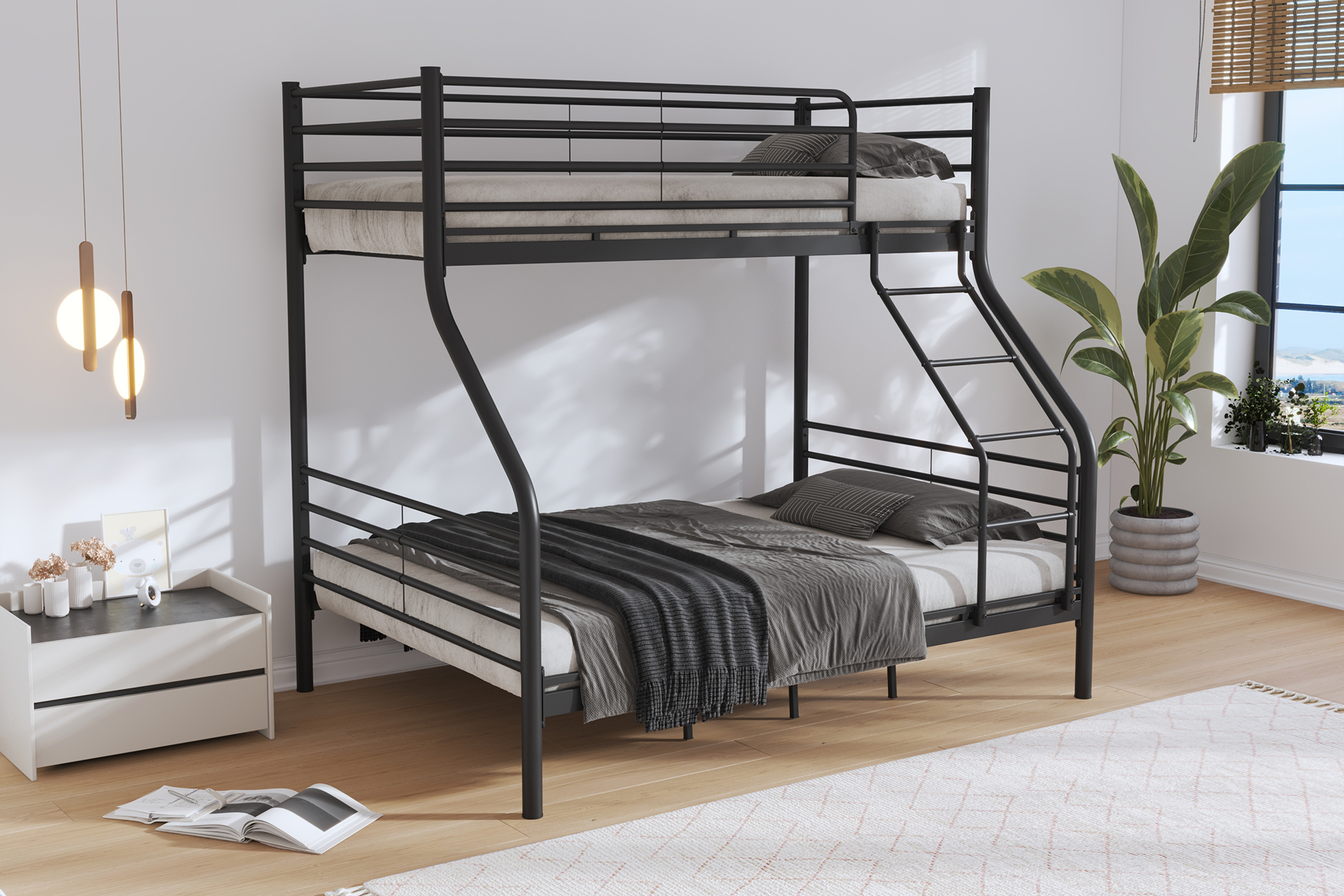 The Toronto's expanded 140cm bottom tier utilizes ultra-thick slats to accommodate multiple occupants without frame deflection.
5. Asymmetrical Density: The Twin-Over-Full Advantage
When administrators need to house three individuals in a single room comfortably, traditional layouts fail. The Toronto architecture resolves this by introducing an asymmetrical twin-over-full configuration. By pairing a massive 140 cm wide ground-level bed with a standard 90 cm elevated bunk, this unique layout comfortably accommodates three adults in the exact same vertical footprint.
To support this extended 140 cm width without bowing, the Toronto model relies on differential slat engineering. While the top tier uses standard supports, the wider ground-level platform is fortified with exceptionally thick 20x30 mm heavy-gauge slats. This ensures the foundation remains perfectly flat and structurally sound, even when multiple students utilize the bottom platform simultaneously.
6. Acoustic Eradication in Shared Quarters
A bustling housing facility suffers immensely when ambient noise disrupts the sleep cycles of its residents. The terrifying metallic squeak caused by friction between the mattress slats and the side rails is the primary source of auditory pollution in shared accommodations.
To resolve this universally, advanced commercial engineering utilizes specialized noise reducer plastic caps. These high-density polymer barriers isolate the knock-down slats, physically preventing them from rubbing against the main side beams. By intercepting the kinetic energy, the polymer caps ensure that zero friction occurs. A completely silent bed is a massive psychological upgrade, significantly enhancing the living standard within any densely populated environment.
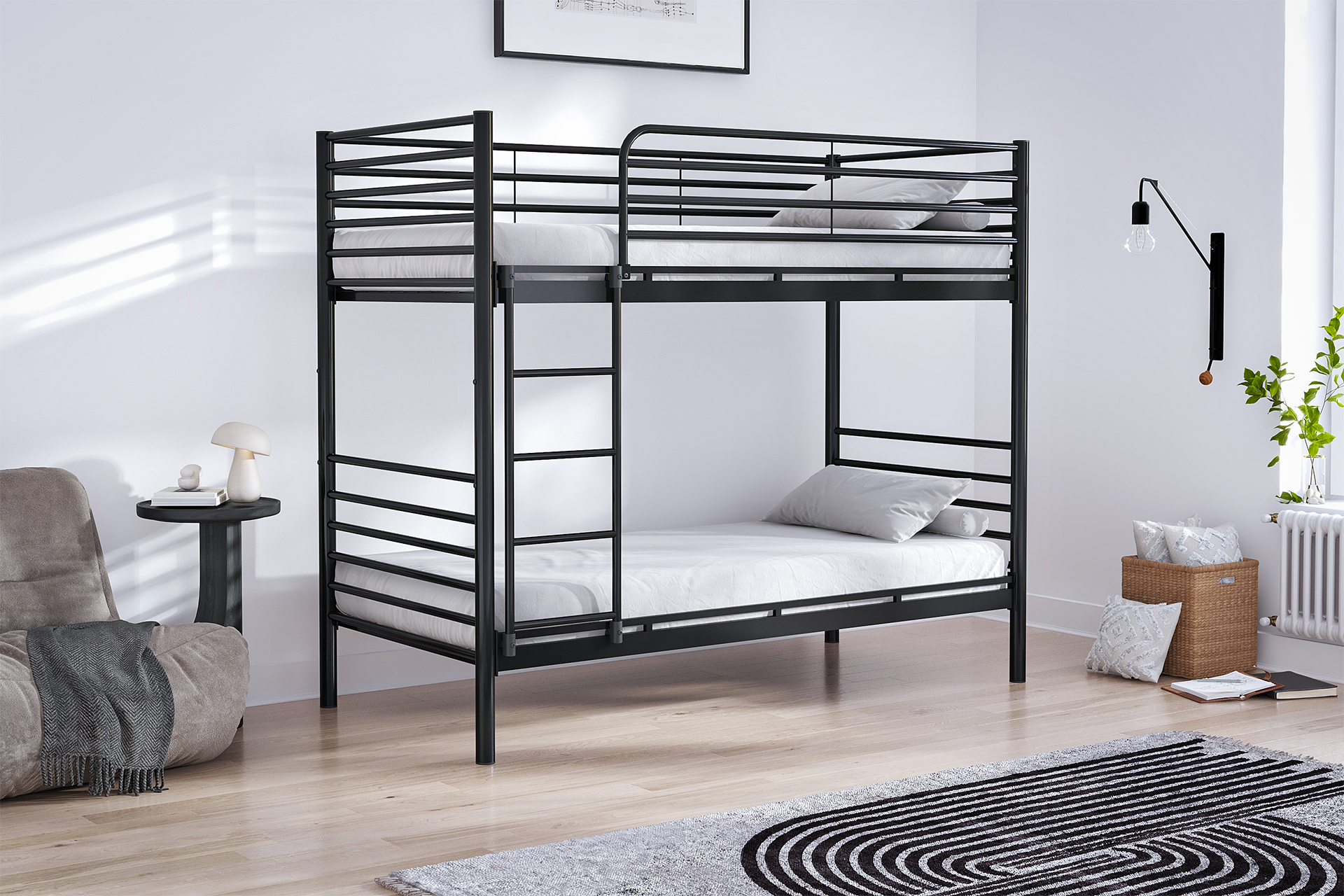 The N747 framework features a dense wire mesh grid, providing the ultimate anti-sagging, friction-free foundation.
7. Mass Procurement and Global Logistics
Upgrading thousands of rooms simultaneously requires flawless maritime logistics. As a highly experienced international supplier, we optimize our entire output through extreme flat-pack techniques. Because the acoustic knockdown slats and modular pillars are completely demountable, they can be compressed tightly into heavy-duty cartons.
Executing a massive wholesale contract allows institutions to fit between 150 to 200 units inside a single 40-foot shipping container. This hyper-volume optimization slashes international freight expenses exponentially. By minimizing the volume of empty air shipped overseas, universities can allocate their valuable capital directly toward acquiring premium, heavy-gauge commercial platforms.
Frequently Asked Procurement Questions
Are you a direct producer of these commercial platforms?
Yes. By bypassing middlemen entirely, we maintain strict quality control over every polymer cap and steel profile, ensuring absolute structural dominance for your residential projects.
How does your factory manage extreme volume orders?
Our 20,000 M2 automated facility features robotic welding and precision laser cutting, allowing us to output massive quantities monthly while adhering to strict TS EN 747 tolerances.
Can an international supplier deliver these assets globally?
Absolutely. Through advanced flat-pack packaging, we compress the components safely into high-density cartons, ensuring flawless, damage-free maritime delivery worldwide.
Is the acoustic hardware included in a wholesale purchase?
Yes. Every bulk contract includes the essential noise-reducing plastic caps and heavy-gauge orthopedic slats required to guarantee a squeak-free environment.
Can a tiered structure support adult weight safely?
Absolutely. Built from cold-rolled alloys with up to 1.50mm wall thickness, our commercial units easily support loads scaling from 120 kg to 200 kg per individual tier.
Do these modular systems suit dynamic housing needs?
Yes. Utilizing threaded insert nipples, the towering frameworks can be unbolted and separated into independent floor-level beds, allowing instant reconfiguration based on shifting demographics.
How do you prevent mattress sagging on the lower tiers?
We deploy exceptionally thick 20x30 mm slats or dense wire mesh grids. This rigid orthopedic foundation prevents the foam from sinking, offering flawless spinal alignment.
Are these layouts suitable for an upscale guest house?
Yes. Hybrid models integrating 18mm wood panels provide a boutique aesthetic, offering premium, stylish, and highly durable accommodations to discerning travelers.