
Dormitory Bunk Bed Weight Capacity: What You Need to Know
When evaluating mass accommodation infrastructure, understanding the absolute physical limits of dormitory bunk beds is critical for institutional safety. By partnering directly with a certified bunk bed manufacturer, facility directors can secure specialized architectures engineered specifically for mature, adult occupants. Retail furniture simply collapses under the relentless, dynamic pressures of a busy campus or a high-turnover hospitality center. To protect the capital budget and shield the institution from liability, procurement officers must deeply analyze the metallurgy, column geometry, and certified load-bearing thresholds of their chosen sleeping platforms.
1. The Science of Static vs. Dynamic Loads
In structural engineering, capacity is not a single, arbitrary number. It is divided into static and dynamic loads. A static load refers to a motionless mass pressing down on the frame. However, humans do not sleep entirely still. The act of climbing a ladder, turning over forcefully, or two students sitting on the edge of the mattress generates dynamic kinetic energy. This kinetic force multiplies the effective weight placed upon the steel joints.
A high-quality commercial tiered frame is engineered to absorb both. Depending on the chosen profile dimensions, our advanced models guarantee a minimum safe carrying capacity of 120 kg, scaling all the way up to an extreme 200 kg per individual tier. This means a standard dual-level unit can comfortably and safely support up to 400 kg of combined dynamic human weight without suffering from structural fatigue or joint deformation.
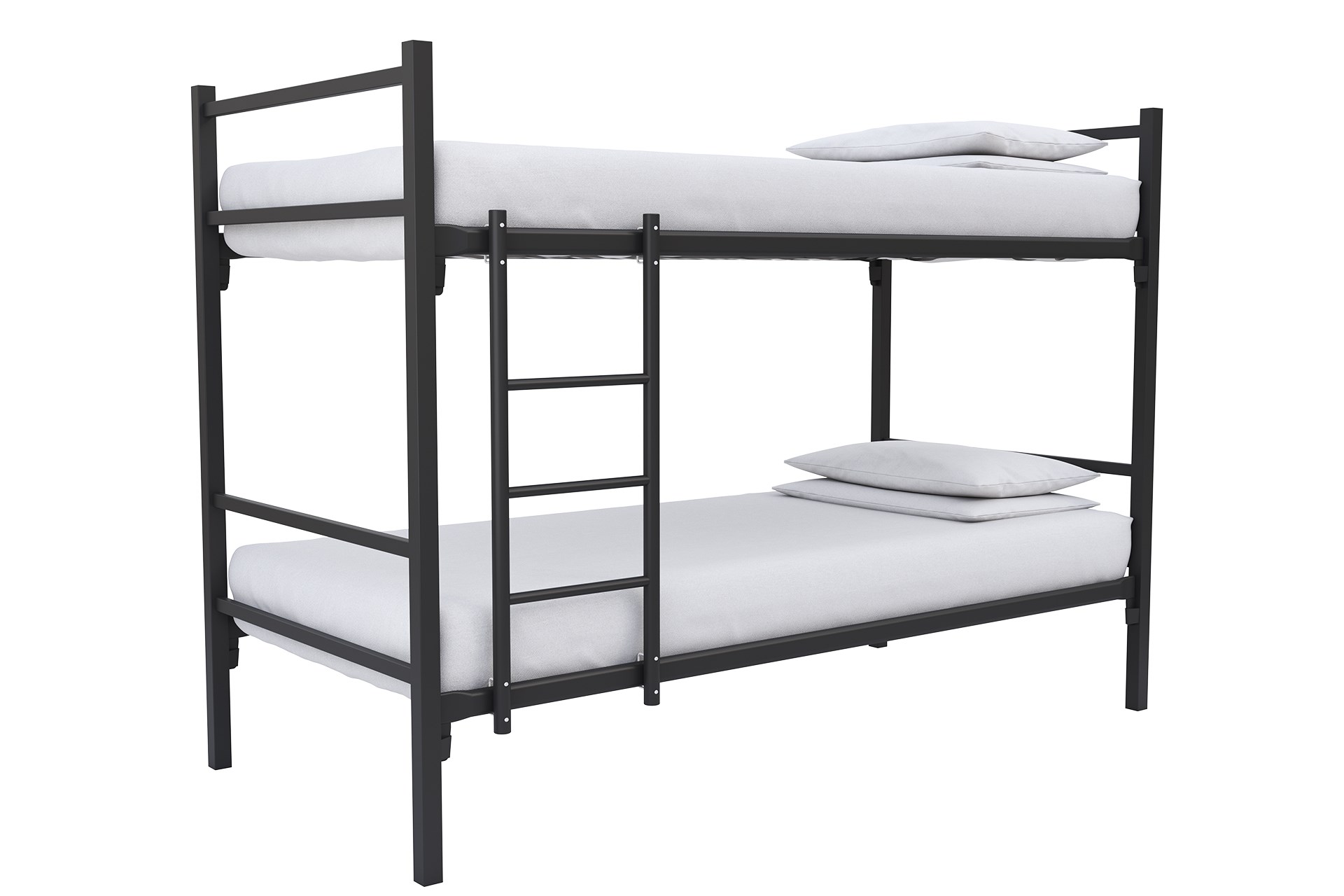 The Santiye model demonstrates extreme 40x40mm column geometry, designed specifically to carry loads up to 200kg per tier.
2. Metallurgical Purity: Why Alloy Quality Matters
The foundation of an enduring sleep platform lies exclusively in its core material. We actively reject brittle casting techniques because inferior iron contains microscopic internal fissures. When a heavy dynamic load is applied, these invisible flaws crack, leading to sudden and catastrophic failure.
Instead, as an elite industrial producer, we exclusively utilize premium cold-rolled steel, specifically DKP DC01 CR grade. This high-tensile material possesses the necessary elasticity to absorb sudden shocks and immediately return to its original form. Whether subjected to the rigors of an active military base or the daily routines of university scholars, this pure alloy ensures the heavy-gauge skeleton remains completely intact and highly resilient for decades.
"Procurement officers must look beyond visual aesthetics. The true value of a commercial sleep structure is defined by its wall thickness and metallurgical purity, which directly dictate its maximum safe load limit."
3. Wall Thickness and Profile Geometry
A towering structure must resist lateral torsion—the twisting force that occurs when someone climbs the ladder. This resistance is achieved through the geometric shape and the wall thickness of the primary pillars. Inside our automated factory, we fabricate these pillars in various configurations to meet precise capacity requirements.
For environments demanding absolute rigidness, such as a secure correctional institution, we deploy monumental 40x40 mm and 50x50 mm square profiles. The 90-degree corners provide unparalleled torsional resistance. For environments seeking a softer visual contour without sacrificing strength, we utilize massive circular tube diameters of 42 mm, 51 mm, and 60 mm. Most critically, the wall thickness of these tubes dictates the weight threshold. By upgrading the standard 0.7 mm thickness to heavy-duty options like 1.20 mm, 1.50 mm, or a staggering 2.00 mm, the bed transforms into an indestructible asset capable of safely holding up to 200 kg per level.
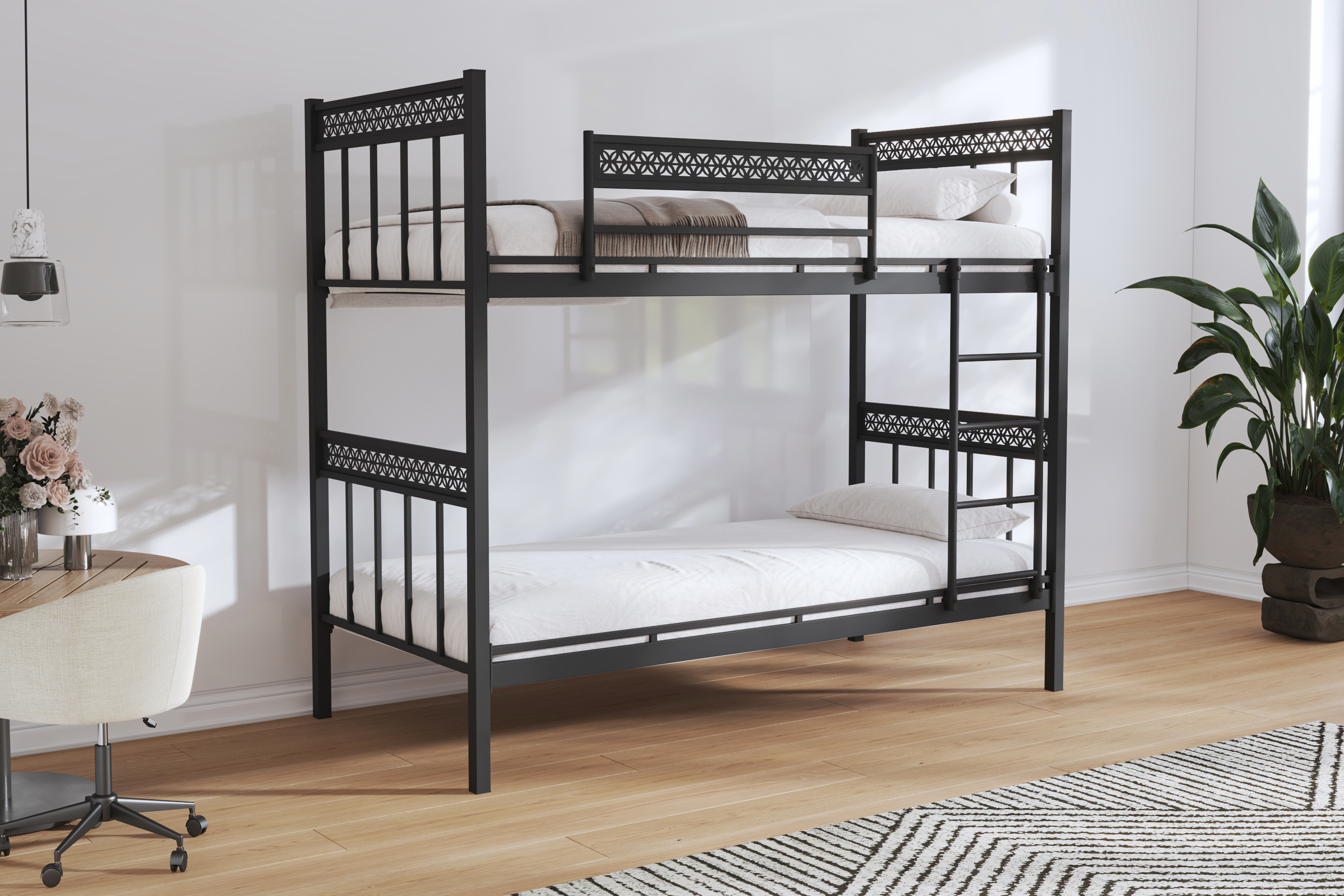 The geometric square profiles of the Motif framework provide supreme resistance against lateral torsion, preventing the sway that compromises weight limits.
4. Fortifying the Mattress Foundation
A strong pillar means nothing if the horizontal platform supporting the occupant fails. Traditional wooden planks warp, snap, and crack under concentrated adult weight. To safely achieve a 200 kg capacity, the mattress foundation must be engineered with industrial precision.
We utilize deep 20x60 mm or 25x50 mm rectangular side rails that act as the main weight-bearing bridges. Across these rails, multiple robust knockdown slats (typically 15x25 mm or 20x30 mm) are distributed to create a flat, orthopedic surface. For extreme deployment scenarios, such as heavy industry labor camps, we integrate a dense 6x7.5-2.8 mm steel wire mesh grid. This continuous network distributes adult weight flawlessly, effectively doubling the lifecycle of the foam mattresses placed upon them while eliminating the risk of sagging.
5. Asymmetrical Engineering: The Toronto Model
Handling diverse capacities in a single room requires asymmetrical design logic. The Toronto architecture introduces a twin-over-full configuration, pairing a massive 140 cm wide ground-level bed with a standard 90 cm elevated bunk. This layout allows multiple adults to share the lower tier.
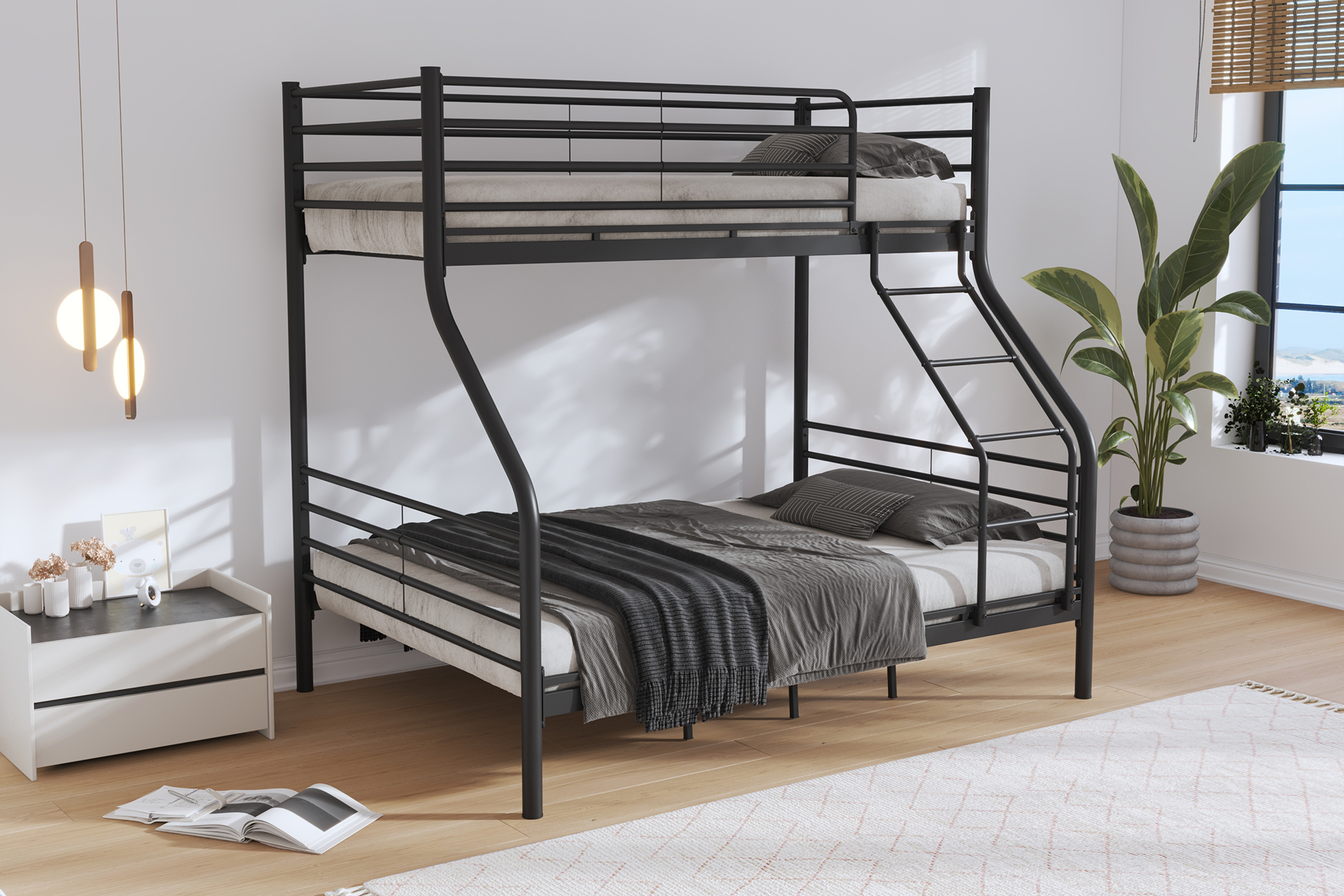 The Toronto's expanded 140cm bottom tier utilizes ultra-thick slats to accommodate multiple occupants without frame deflection.
To support this extended 140 cm width safely, differential slat engineering is applied. The wider bottom tier is fortified with exceptionally thick 20x30 mm heavy-gauge slats, ensuring the foundation remains perfectly flat and structurally sound under the combined weight of two adults. This intelligent load distribution is the hallmark of professional institutional furniture.
6. Liability and Safety Certifications
Exceeding a frame's weight capacity results in catastrophic injuries and severe legal liabilities for the institution. To protect facility managers, every elevated tier we construct complies strictly with ISO, TSE, ASTM Safety Standards, and CPSC Guidelines.
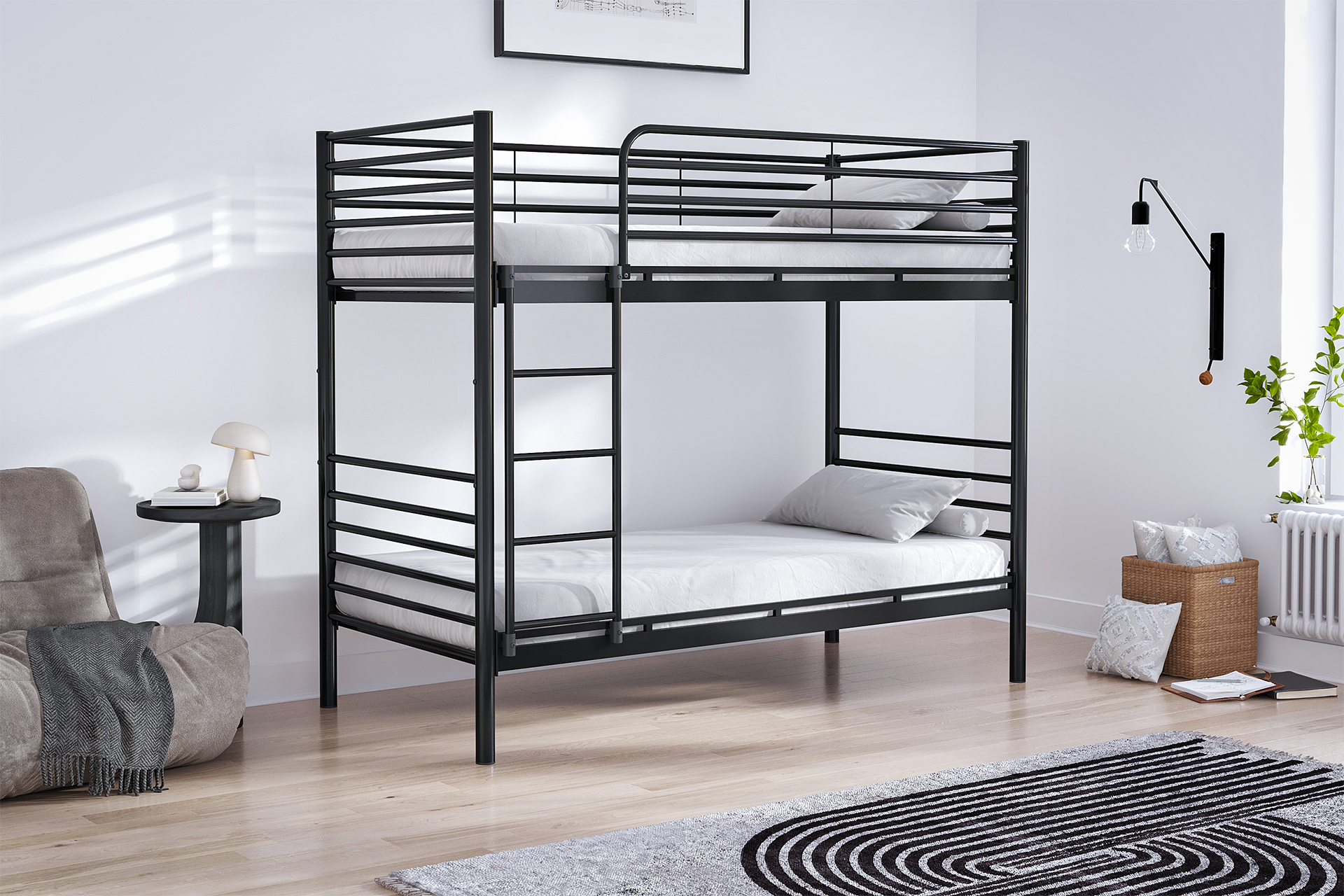 The N747 model bears official TS EN 747 certifications, ensuring maximum safety and verified load capacities for institutional use.
Our elite models proudly bear the EN747 safety certification. This European standard involves rigorous mechanical testing, subjecting the frame to intense impact and sustained static loads to verify its absolute limits. By deploying certified structures, universities and hospitality centers guarantee that their accommodations are legally compliant and fundamentally safe.
7. Mass Procurement Logistics
Acquiring hundreds of high-capacity sleeping platforms requires strategic financial planning. A trusted global supplier manages mass logistics efficiently by utilizing extreme flat-pack packaging techniques. Because the heavy-duty components are demountable, they can be compressed tightly into cartons.
Executing a massive wholesale agreement allows institutions to fit between 150 to 200 units inside a single 40-foot shipping container. By minimizing empty air, administrators slash international maritime freight expenses, allowing them to invest their capital directly into upgrading the wall thicknesses and load capacities of their chosen platforms.
Frequently Asked Procurement Questions
What is the exact maximum load capacity of these tiered platforms?
Depending on the selected wall thickness and profile geometry, our commercial models support between 120 kg and 200 kg per individual tier safely.
Are you a direct producer of these high-capacity frames?
Yes. We oversee every stage of fabrication in our advanced facility, ensuring that every weld and steel profile meets our strict heavy-duty standards.
Does your factory offer custom wall thicknesses for extreme environments?
Absolutely. For high-risk facilities, we can increase the tubular wall thickness up to 1.50 mm or 2.00 mm to maximize the torsional strength of the unit.
Can an international supplier verify the safety of these structures?
Yes. Our frameworks are subjected to rigorous testing and hold official certifications including ISO, TSE, and TS EN 747, guaranteeing their structural integrity globally.
Is the hardware included in a wholesale purchase to ensure stability?
Yes. Every bulk contract includes all the heavy-duty mechanical joints, noise-reducing plastic caps, and thick orthopedic slats required for a secure assembly.
Why is high-tensile alloy superior to cheap cast metal for load bearing?
Cold-rolled DKP DC01 CR alloys possess natural elasticity. When an adult climbs the frame, the alloy absorbs the kinetic shock instead of cracking, which is a common failure in brittle cast metals.
How does the 140cm wide bottom bed support multiple adults?
By utilizing ultra-thick 20x30 mm horizontal slats, the foundation resists bowing, allowing two adults to rest safely on the lower tier without compromising the framework.
Do these robust systems suit dynamic campus housing needs?
Yes. Despite their massive load capacity, models with threaded insert nipples can be unbolted and separated into independent floor-level platforms for instant room reconfiguration.