
Custom Sized Metal Bunk Beds for Specific Dormitory Needs
When developing a master floor plan for institutional accommodations, securing the perfect furniture dimensions is absolutely essential. Partnering with a specialized bunk bed manufacturer empowers campus administrators to overcome severe architectural limitations. When standard retail dimensions fail to maximize available floor space, investing in custom sized metal bunk beds is the definitive strategy for modern residential environments. By meticulously tailoring the exact width, length, and vertical clearance of every individual bed, facility directors can guarantee that each student enjoys a spacious, orthopedic bunk that perfectly matches the geometry of the room.
1. The Engineering Behind Bespoke Sleeping Architectures
Altering the fundamental footprint of a commercial bed requires profound metallurgical expertise. An elite producer cannot simply stretch a frame; they must recalibrate the entire structural geometry to ensure that the extended bunk maintains its absolute rigidity. When the span of a sleep surface increases, the downward gravitational force on the center of the bed multiplies significantly.
To counter this dynamic stress on the bunk, advanced engineering is deployed. A bespoke bed utilizes high-tensile DKP DC01 CR cold-rolled steel. The primary pillars are reinforced, often upgrading to massive 40x40 mm square profiles or 51Ø circular tubes. Furthermore, the horizontal slats supporting the mattress of the bunk are fortified with thicker gauges, ensuring that a custom-length bed never sags or bows under the weight of an adult occupant.
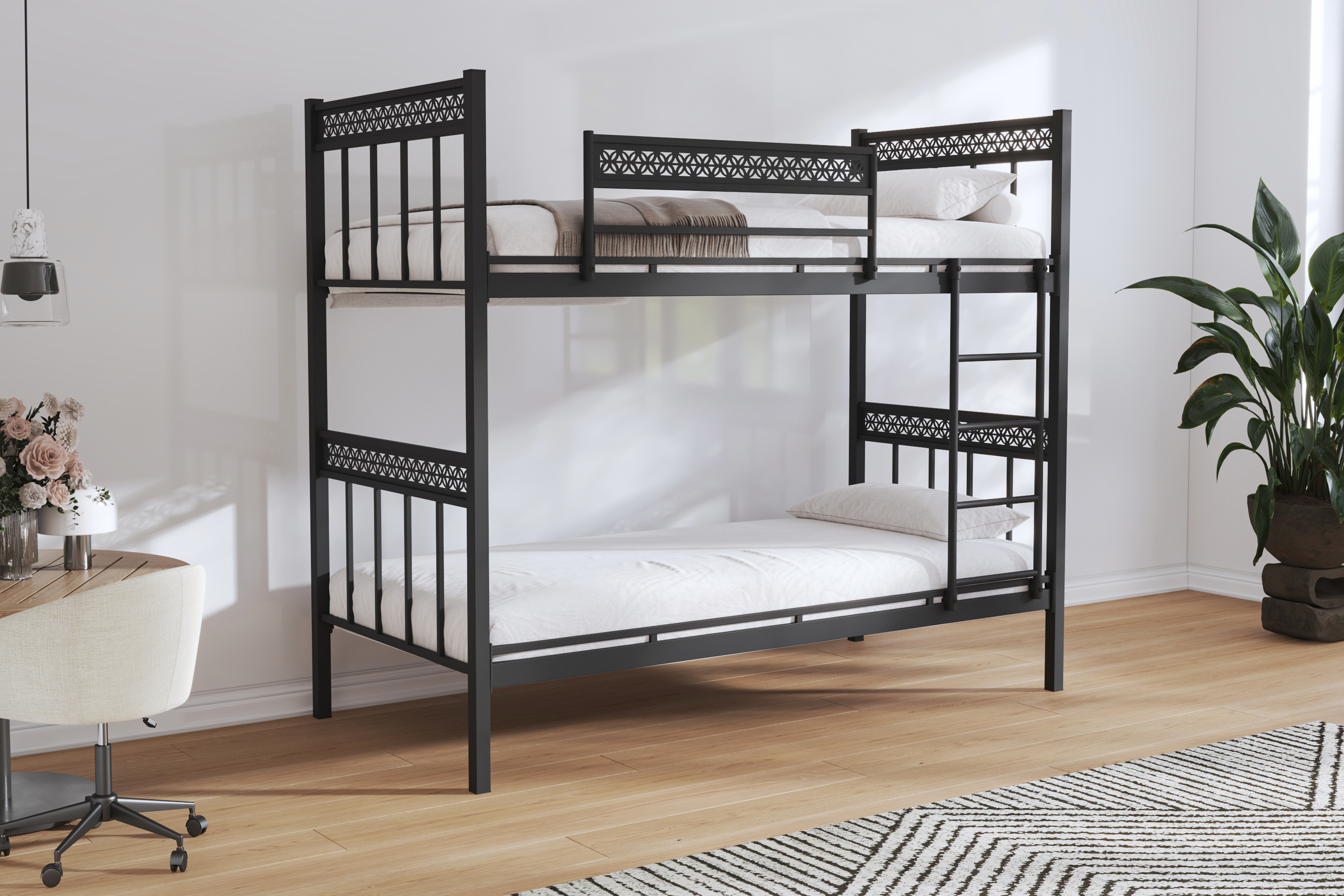 Modular frameworks like the Motif series are engineered to support custom dimensions, allowing administrators to dictate the exact footprint of the bed.
2. Adapting to Unique Room Footprints
While a standard 90x190 cm format works well for general populations, specialized facilities frequently require highly specific footprints for their furniture. A historic building transformed into a student hostel often features narrow, irregular corridors. In such scenarios, a customized 70x190 cm or 80x190 cm bed provides a comfortable resting area without obstructing emergency fire exits or blocking natural light from windows.
Conversely, athletic academies and sports dormitories face the opposite challenge. Taller residents require a vastly expanded bunk to rest comfortably. For these specific demographics, a specialized extra-long bed measuring 100x200 cm or even 110x200 cm can be fabricated. This level of customization ensures that every individual, regardless of their physical stature, experiences a deeply restorative sleep on their assigned bunk.
"Architectural optimization means the room should never adapt to the furniture; the furniture must adapt to the room. A custom-sized bunk maximizes utility while preserving the psychological comfort of the resident."
3. Modifying Height and Vertical Clearance
Horizontal dimensions are not the only variables that require customization on a tiered bed. Vertical clearance is a critical safety and comfort metric. Operating a massive 20,000 M2 automated factory, we seamlessly adjust the vertical pillars of each bespoke bed. If a renovated basement or an attic room suffers from exceptionally low ceilings, the overall towering height of the bunk can be compressed safely.
Conversely, if the room boasts high ceilings, the distance between the lower bed and the upper platform can be expanded. This increased internal airspace allows an adult to sit completely upright on the bottom bunk without hitting their head. Vertical customization transforms a standard bed into a premium, highly ergonomic living space.
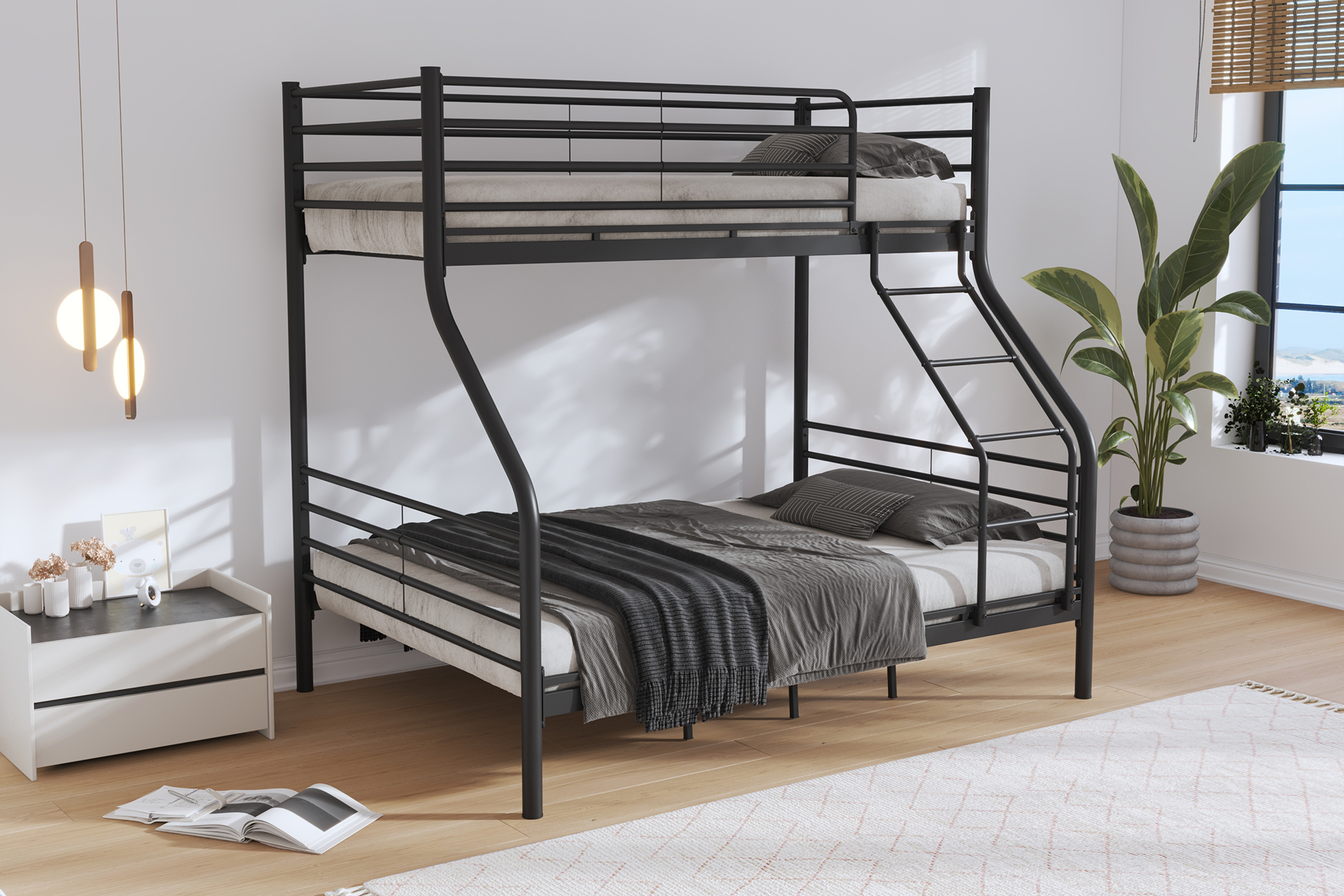 The Toronto model exemplifies asymmetrical customization, pairing a massive 140cm ground-level platform with a standard upper tier to maximize occupancy.
4. Twin-Over-Full: The Asymmetrical Advantage
When a facility needs to accommodate three individuals in a single room comfortably, a traditional symmetrical bed layout fails. The solution is an asymmetrical design, often referred to as a twin-over-full configuration. By engineering a massive 140x190 cm ground-level bed and pairing it with a standard 90 cm upper bunk, this unique layout comfortably houses three adults within the exact same vertical footprint.
To support this extended 140 cm width safely, the bottom tier of the bunk is fortified with exceptionally thick 20x30 mm heavy-gauge orthopedic slats. This ensures the foundation of the bed remains perfectly flat and structurally sound, completely eliminating mattress sagging even when multiple students utilize the bottom platform simultaneously.
5. Aesthetic Tailoring with RAL Finishes
A bespoke bed is not defined solely by its physical dimensions; its aesthetic presence must also integrate flawlessly into the interior design of the institution. A modern campus requires a bunk that reflects its vibrant corporate identity, moving away from sterile, industrial visuals.
To achieve this, customizable electrostatic powder coating is applied to every bed. Facility directors can select from an extensive array of RAL colors. An upscale hostel might request a sophisticated RAL 9005 Matte Black for their custom bunk, while a youth academy could opt for an energetic RAL 2004 Orange or a calming RAL 7035 Light Gray. This baked enamel finish ensures the bed remains entirely rust-proof and scratch-resistant throughout decades of heavy commercial use.
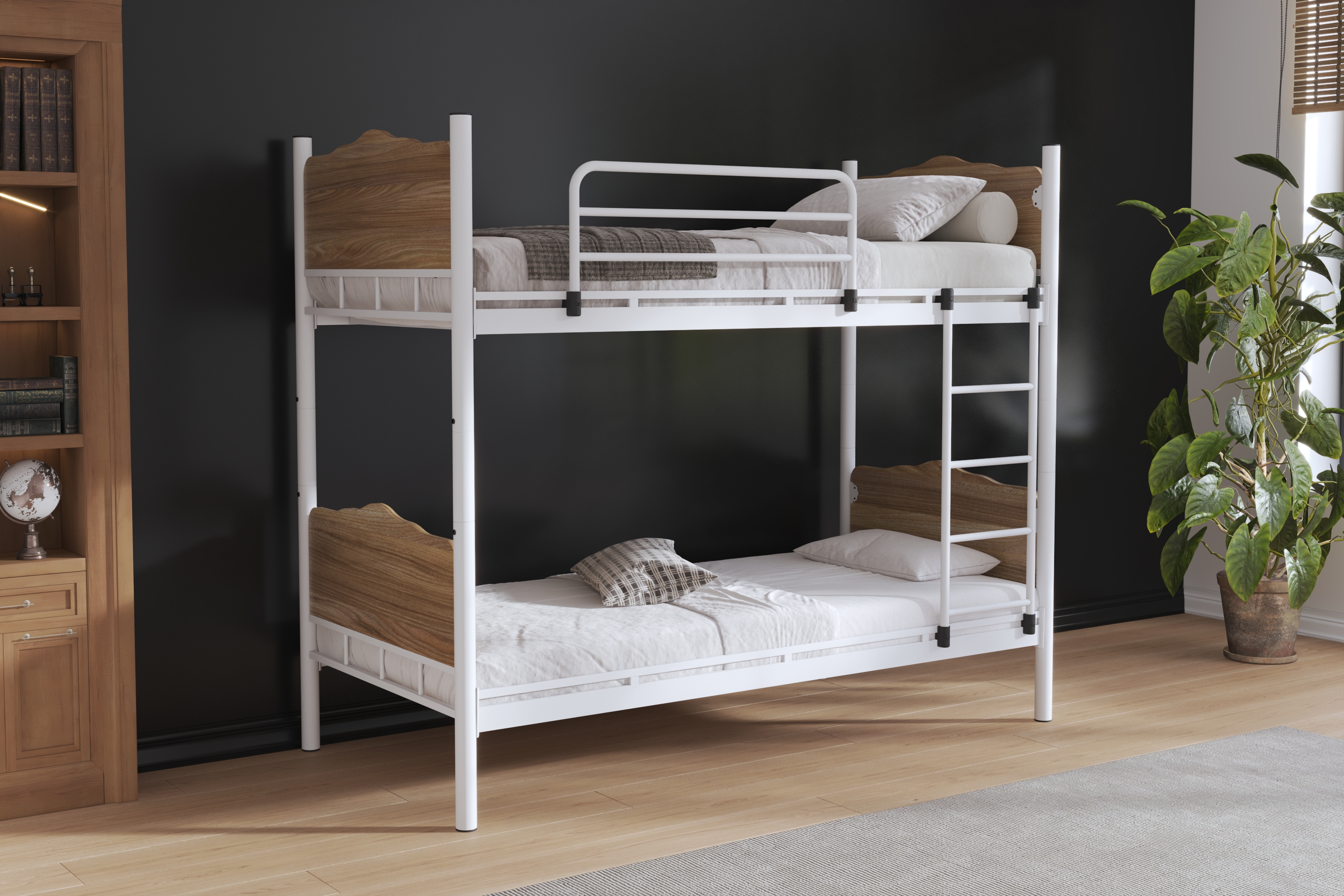 The Daisy framework blends bespoke industrial strength with customizable 18mm wood panels, meeting the exact aesthetic demands of upscale facilities.
6. Navigating Mass Customization Logistics
Fabricating a tailored bed is only half the challenge; delivering thousands of bespoke units across the globe requires masterful logistical planning. An experienced international supplier optimizes the global distribution of these tailored frames through advanced flat-pack techniques. Because the modified columns and expanded guardrails are completely demountable, the components of the bed are compressed tightly into high-density cartons.
Executing a massive wholesale contract allows institutions to fit up to 200 customized, dismounted units inside a single 40-foot shipping container. This hyper-volume optimization slashes maritime freight expenses exponentially, significantly lowering the landed cost of every bespoke bunk. By minimizing the volume of empty air shipped overseas, universities can allocate their capital toward upgrading the structural thickness and custom features of their new furniture.
Frequently Asked Procurement Questions
Are you a direct maker of these tailored frames?
Yes. As a dedicated producer, we customize every dimension of the bed directly on our automated fabrication lines, bypassing all secondary retail markups.
How does your facility handle mass custom orders?
Our factory utilizes robotic laser cutting and welding to output large volumes of customized structures monthly, ensuring extreme dimensional precision for every bunk.
Can an international distributor ship a tailored bed safely?
Absolutely. As a reliable supplier, we use flat-pack packaging methods to compress the tailored components safely into cartons for damage-free global delivery.
Are custom dimensions available for bulk orders?
Yes. Every wholesale agreement can be tailored to feature specific widths, lengths, and vertical clearances to perfectly match the architectural layout of your building.
Can a custom-length bed support adult weight securely?
Yes. By upgrading the steel wall thickness and utilizing heavy-gauge orthopedic slats, an extended bunk effortlessly supports loads ranging from 120 kg to 200 kg per tier.
Is it possible to customize the color of the frame?
Certainly. We offer an extensive range of electrostatic RAL powder coatings, allowing you to match the bed perfectly to your corporate interior design.
How do you prevent a longer frame from squeaking?
We incorporate specialized noise-reducing polymer caps onto every slat of the bunk, completely isolating the metal parts and eliminating friction-induced noises entirely.
Are these tailored systems compliant with safety norms?
Yes. Regardless of the custom dimensions, every elevated bunk is engineered to maintain absolute compliance with strict entrapment and stability regulations.