
Metal vs. Wood Bunk Beds: Which is Best for Student Housing?
Deciding between metal and wood bunk beds is the most significant furniture decision facility managers face when outfitting a modern campus. While domestic shoppers prioritize style, institutional buyers must adopt the rigid endurance standards of an active army installation. A tactical military compound relies on equipment that survives years of relentless physical abuse, and student housing is no different. By collaborating with an experienced bunk bed manufacturer, procurement officers ensure they receive structures engineered for extreme stability rather than just residential appeal.
1. Structural Integrity and Lifespan Dynamics
The fundamental difference between these two materials lies in their molecular resilience. Wooden structures possess a natural warmth but are inherently susceptible to environmental fluctuations. Over time, wood grains can warp, split, or loosen at the joints due to changes in humidity. For a high-density hostel, this degradation translates into frequent maintenance and potential safety hazards. Conversely, a commercial metal framework operates with absolute permanence.
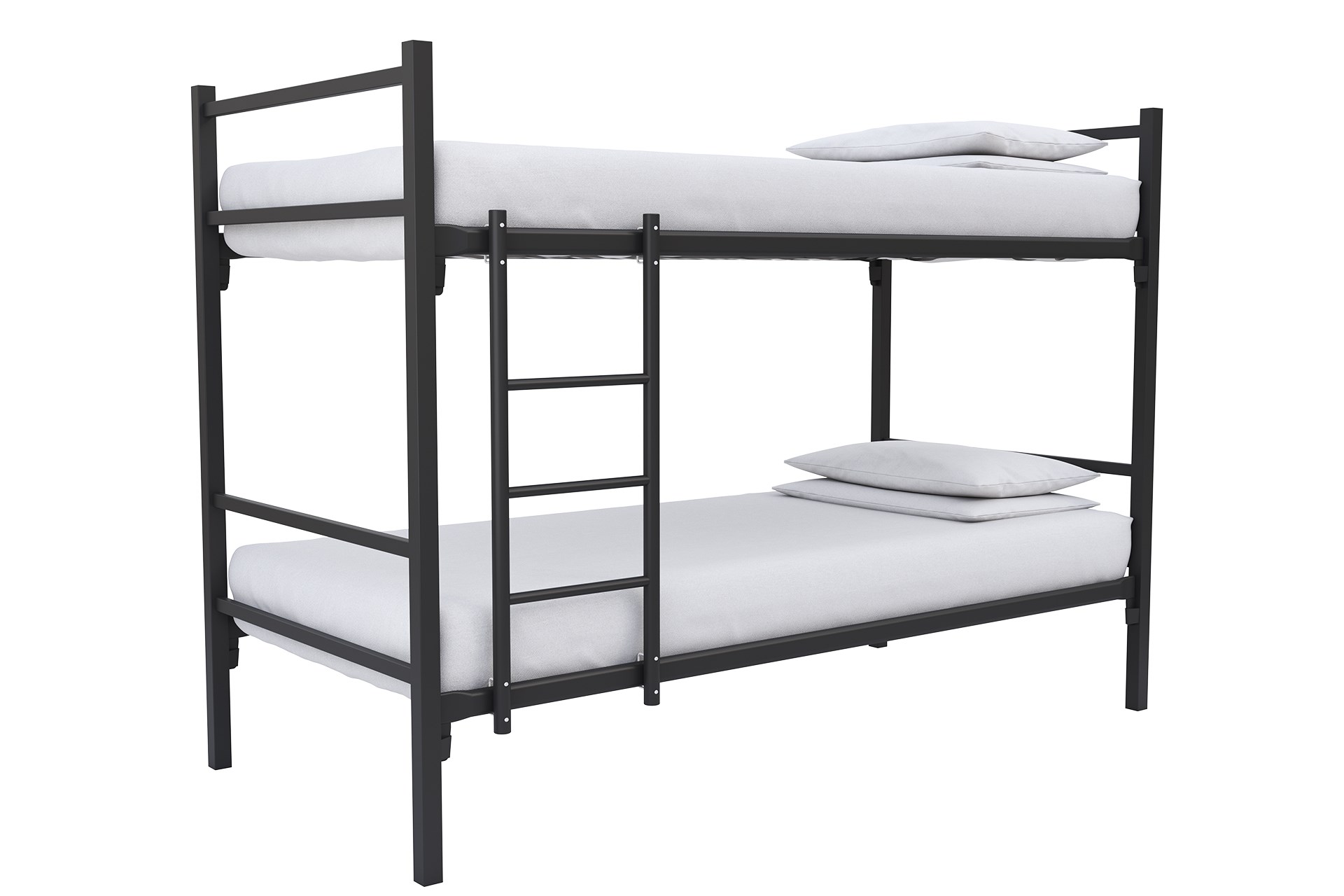 The Santiye model showcases 40x40mm square columns designed for extreme commercial durability.
A modern dormitory requires a skeletal foundation that absorbs kinetic energy flawlessly. Advanced metallurgical designs, like those found in the Santiye or N747 models, utilize high-tensile steel to prevent the wobbling common in cheap alternatives. While a wooden bunk might start to squeak as its fasteners lose their grip, a factory-welded metal unit remains silent and immovable. This unyielding nature is vital for maintaining administrative order and resident satisfaction in large housing complexes.
2. Hygiene, Pest Control, and Ease of Maintenance
In any shared accommodation, whether it be a busy university wing or a high-capacity refugee transition center, hygiene is a non-negotiable metric. Wooden frames are porous, meaning they can harbor bacteria and moisture within their fibers. More alarmingly, wood is the preferred habitat for bed bugs, as the natural crevices provide perfect nesting grounds. For a verified producer, eliminating these biological risks is a primary engineering goal.
Metallic surfaces are entirely non-porous and incredibly easy to sanitize using industrial-grade cleaning agents. An international supplier understands that a durable bed must resist even the most aggressive hygiene protocols. By utilizing advanced electrostatic powder coating, the metal receives an impenetrable shell that repels moisture and halts oxidation. This surface treatment ensures that even in highly humid environments, the bunk remains pristine, professional, and free from microbial buildup.
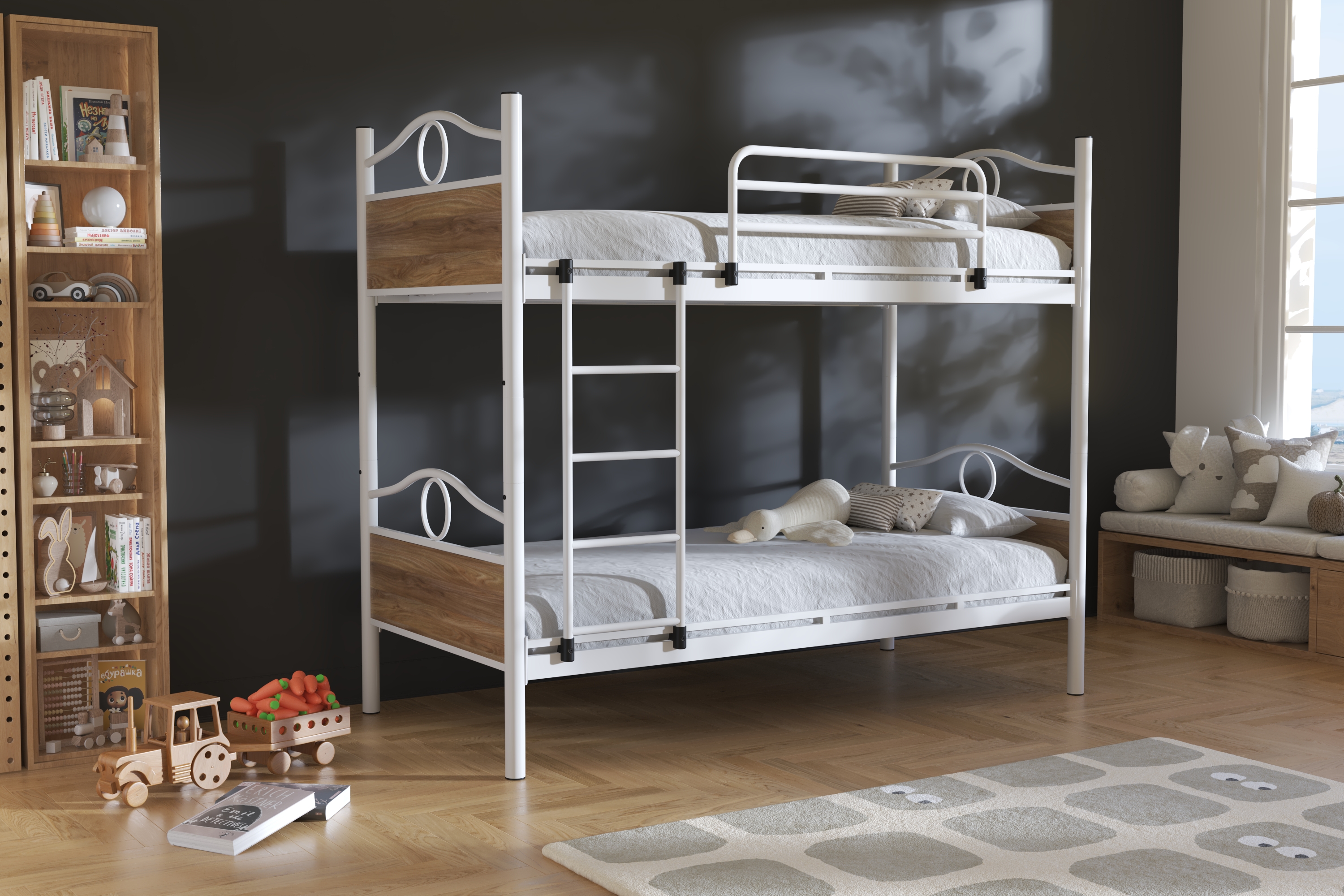 Hybrid models like the Armoni blend 18mm wood panels with a robust steel chassis for an elite aesthetic.
3. Safety Certifications and Liability Mitigation
Institutional liability is a massive concern for property developers and university boards. A high-security prison or a modern correctional facility requires fixtures that meet strict safety mandates without exception. The same rigorous logic applies to student barracks. A wooden bunk rarely carries the official safety certifications required for large-scale government contracts because of its unpredictable breaking points.
In contrast, professional metal units often proudly bear the TS EN 747-1 certification. As seen in the N747 model, this European standard verifies that the frame withstands extreme impact, fatigue, and loading. Safety engineering also dictates the gaps between barriers; for instance, a safe shelter needs furniture where a user cannot accidentally get trapped. Metal engineering allows for these gaps to be milimetrically precise, which is nearly impossible to maintain in organic wood that shifts and expands over time.
4. Logistics, Volume, and Global Shipping
Procuring furniture for a massive project involves complex maritime logistics. A dedicated factory optimizes its packaging to ensure the lowest possible landed cost for the buyer. Wooden beds are often bulky and heavy, leading to high shipping costs and increased risk of damage during transit. For an international supplier, flat-pack efficiency is a mathematical masterpiece.
Consider the Delta model, where the headboard patterns are demountable. This innovation allows the entire heavy duty framework to be compressed into ultra-slim cartons, maximizing shipping container volume by up to 50% compared to standard wood. Whether the cargo is destined for an urban campus or a remote worker site, the ability to fit 450 pieces into a single container significantly lowers the environmental footprint and the total project budget.
| Performance Metric | Traditional Wood Bed | Industrial Steel Platform |
|---|---|---|
| Pest Resistance | High risk (bed bugs, moisture) | Zero risk (non-porous alloys) |
| Weight Capacity | Variable (limited by wood grain) | Extreme (supported by 51Ø pillars) |
| Acoustic Quality | Squeaks over time (loosening joints) | Silent (noise reducer polymer caps) |
| Fire Safety | Combustible material | Flame resistant (electrostatic coating) |
| Convertibility | Rarely detachable | Fully convertible with screw-secured nipples |
5. The Best of Both Worlds: Hybrid Architectures
Many facility managers fear that choosing metal means sacrificing the visual warmth students desire. However, modern B2B designs have solved this dilemma through hybrid engineering. As a primary producer, we have developed models that pair the indestructible skeleton of steel with the refined look of wood. A stunning bunk doesn't have to be fragile.
The Woodex, Armoni, and Daisy series utilize 18mm chipboard (Sunta) panels integrated into massive 51Ø metal columns. This approach provides the occupant with the organic texture of Walnut or Cordoba wood while the 5mm solid metal bars beneath the slats handle the heavy loads. For an even more luxurious feel, the Dora model replaces bare wood with fabric-upholstered panels, turning a standard bunk into an elite hotel-grade suite.
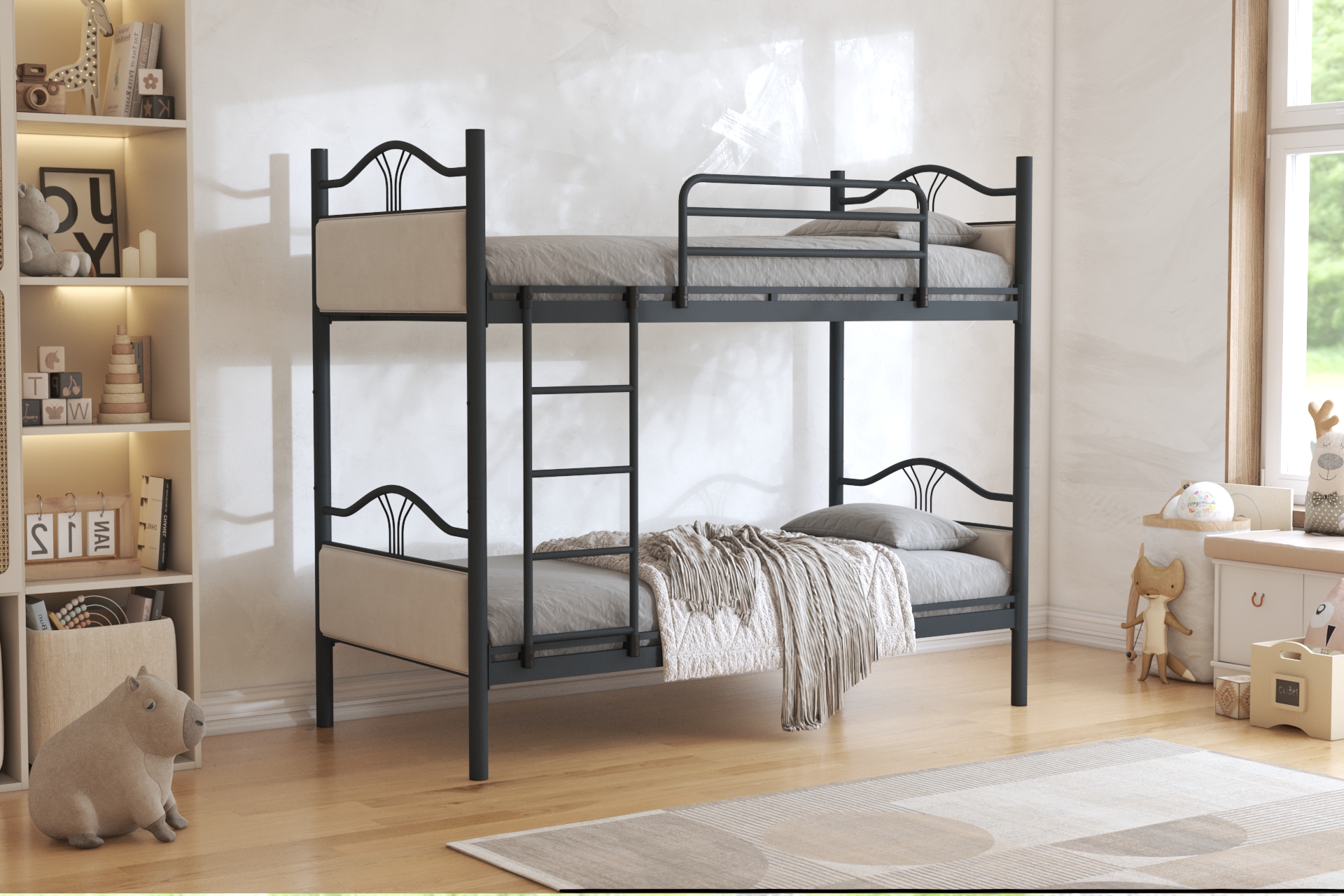 The Dora model utilizes high-density foam and soft fabric to mask its 51Ø steel columns with luxury.
6. Total Cost of Ownership (TCO) and ROI
Executing a large wholesale purchase requires looking beyond the initial invoice. A cheap iron frame or a standard wooden unit has a high "invisible cost" of repair. In a high-traffic dormitory, a bed that breaks after two years is a financial disaster. Investing in a reinforced bunk that lasts for 20 years represents the most responsible use of institutional funds.
The Toronto and Futonmax models further enhance ROI by providing multi-use capabilities. A convertible bed that acts as a couch during the day and a resting platform at night saves the university from purchasing additional seating. This multi-functional approach doubles the utility of the room's square footage, significantly increasing the property's potential revenue.
7. Conclusion: The Verdict for Institutional Success
While wood remains a classic choice for low-impact residential environments, it cannot compete with metal in the professional sector. A reliable bed anchors the entire accommodation experience. A sturdy bunk ensures that every worker, student, or guest wakes up fully rested and ready for productivity. By rejecting brittle iron and exclusively utilizing high-tensile metal alloys, a dedicated producer provides a permanent solution to mass housing. Whether you are outfitting a massive military complex or an elegant boutique hostel, the choice is clear: metal architecture provides the safety, hygiene, and durability that modern institutions demand.
Frequently Asked Procurement Questions
Are metal platforms really more durable than wood for university students?
Absolutely. While a wood bed can warp, a heavy duty steel framework resists lateral torsion and dynamic weights far better, ensuring a 20+ year lifecycle in intense environments.
How do you prevent the "institutional look" when using metal?
We recommend hybrid models. Models like the Daisy or Armoni use 18mm chipboard accents to provide the visual warmth of a traditional dormitory while retaining a robust metal chassis.
Do metal frames make noise?
Our designs incorporate noise reducer plastic caps. This polymer barrier isolates the metal slats from the side rails, guaranteeing a permanently silent rest experience for every user.
Are these frames suitable for emergency shelter or refugee projects?
Yes. Their flat-pack efficiency and rapid assembly (some as fast as 30 seconds) make them ideal for quick deployment in any transitional shelter or disaster relief site globally.
Is a metal frame safe for a correctional or prison environment?
Yes. We utilize screw-secured insert nipples and high-gauge steel to ensure all joints are tamper-resistant, making them standard for any modern correctional or detention facility.
Can we buy these in wholesale quantities with custom colors?
Yes. As a primary producer, we handle massive wholesale contracts. Our factory offers electrostatic powder coating in RAL colors (Black, Gray, Beige, Blue, etc.) to match your corporate branding.