
The Importance of Acoustic Isolation in Dormitory Bunk Beds
When outfitting high-density campus housing, ensuring the psychological and physical comfort of residents is paramount. Procurement directors must prioritize acoustic isolation when selecting dormitory bunk beds for their massive residential projects. By securing inventory directly from a reputable bunk bed manufacturer, institutions can entirely eradicate the auditory pollution that plagues traditional multi-tiered furniture. A silent sleeping environment is not a luxury; it is an absolute operational necessity that dictates the academic success of scholars and the deep recovery of commercial residents.
1. The Hidden Cost of Auditory Pollution
In a densely packed living space, sound travels freely. The most persistent and frustrating complaint among residents sharing a room is the high-pitched, metallic squeak that echoes whenever someone turns over in their sleep. This noise pollution fragments the rapid eye movement (REM) cycles of everyone in the immediate vicinity. Chronic sleep deprivation leads to elevated stress levels, diminished cognitive performance, and a stark drop in overall facility satisfaction.
This terrible noise originates from friction. In poorly designed retail furniture, the horizontal slats supporting the mattress are either loosely tied with wire or poorly welded directly to the main chassis. As the occupant shifts their weight, these raw metal components grind against one another. The hollow tubes act as acoustic amplifiers, broadcasting that metallic friction across the room. Solving this problem requires advanced structural intervention.
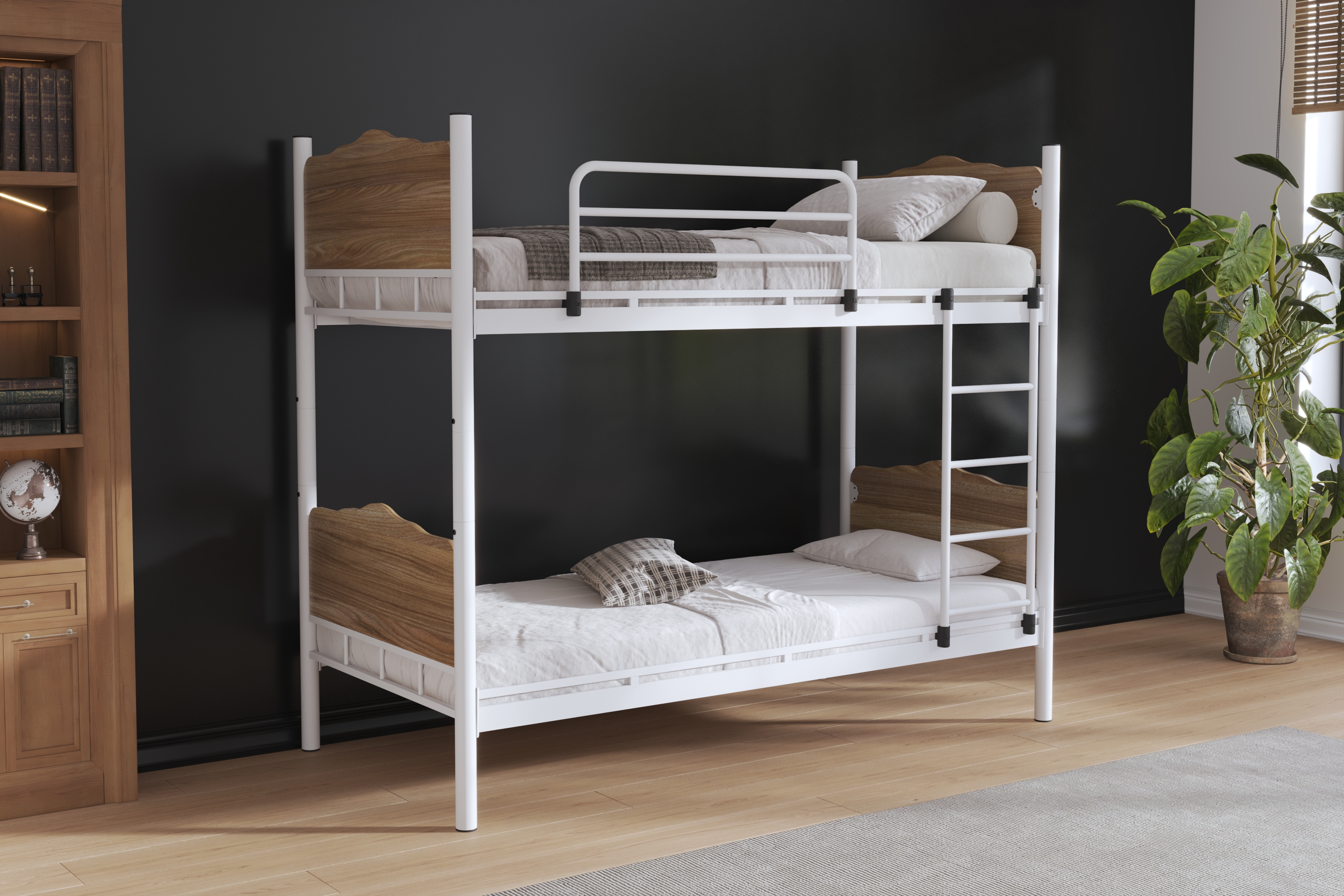 The Daisy model integrates 18mm chipboard panels that naturally dampen ambient room echoes, enhancing acoustic isolation.
2. Engineering Silence: Polymer Isolation Caps
To achieve absolute silence, the transfer of kinetic energy must be intercepted before it creates friction. Professional commercial beds utilize a brilliant engineering solution: noise reducer plastic caps. These highly durable polymer barrier components are meticulously fitted onto the ends of every single knockdown slat.
When a 15x25 mm or 20x30 mm slat is inserted into the deep rectangular side rails (such as the massive 20x60 mm or 25x50 mm profiles), the plastic cap sits directly between the two metal surfaces. This means that no matter how violently an occupant moves on the elevated bunk, metal never touches metal. The heavy-duty polymer absorbs the shock and entirely neutralizes the friction, resulting in a completely squeak-free bed that performs flawlessly in demanding commercial sectors.
"Acoustic isolation is the hallmark of premium institutional furniture. A silent sleep structure protects the resident's psychological well-being and drastically reduces maintenance complaints submitted to facility management."
3. Structural Rigidity: The Foundation of Quiet
Acoustic isolation cannot be achieved if the primary skeleton of the furniture is prone to swaying. A wobbly frame will inevitably loosen its joints, leading to creaks and groans. To counter this, an elite producer utilizes high-tensile, cold-rolled DKP DC01 CR steel rather than brittle cast alloys.
The column geometry plays a massive role in this monolithic stability. By deploying monumental 40x40 mm square pillars or massive 51Ø circular columns with wall thicknesses scaling up to 1.20 mm, the bed becomes virtually immovable. Furthermore, the integration of threaded mechanical joints—such as heavy-duty insert nipples—ensures that the components are bolted together with zero millimeter tolerance. A structure that refuses to sway is a structure that refuses to squeak.
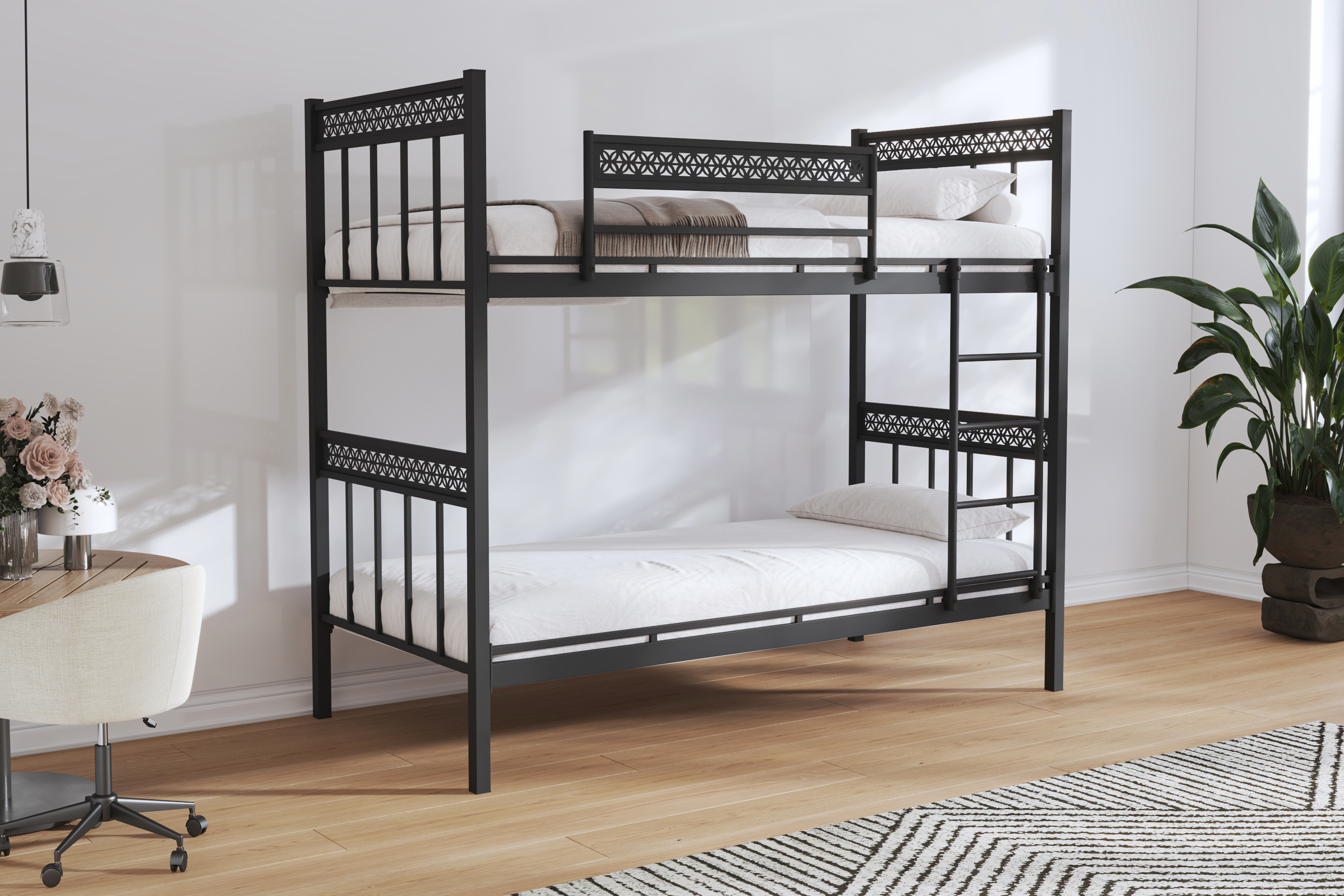 The geometric square profiles of the Motif framework provide supreme resistance against lateral torsion, preventing the sway that causes noise.
4. Advanced Mattress Foundations
While polymer-capped slats are standard for acoustic excellence, certain high-risk environments demand even more robust solutions. For maximum endurance, some models replace knockdown slats with a fully integrated, heavy-duty wire mesh grid (hasır tel). A dense 6x7.5-2.8 mm steel network is welded directly across the horizontal supports.
This continuous matrix distributes the dynamic weight of the occupant evenly across the entire surface. Not only does this prevent the foam mattress from sagging into a hammock shape, but the lack of moving parts ensures absolute acoustic perfection. A rigid, supportive bed provides profound orthopedic alignment while guaranteeing that zero decibels of noise are generated during the night.
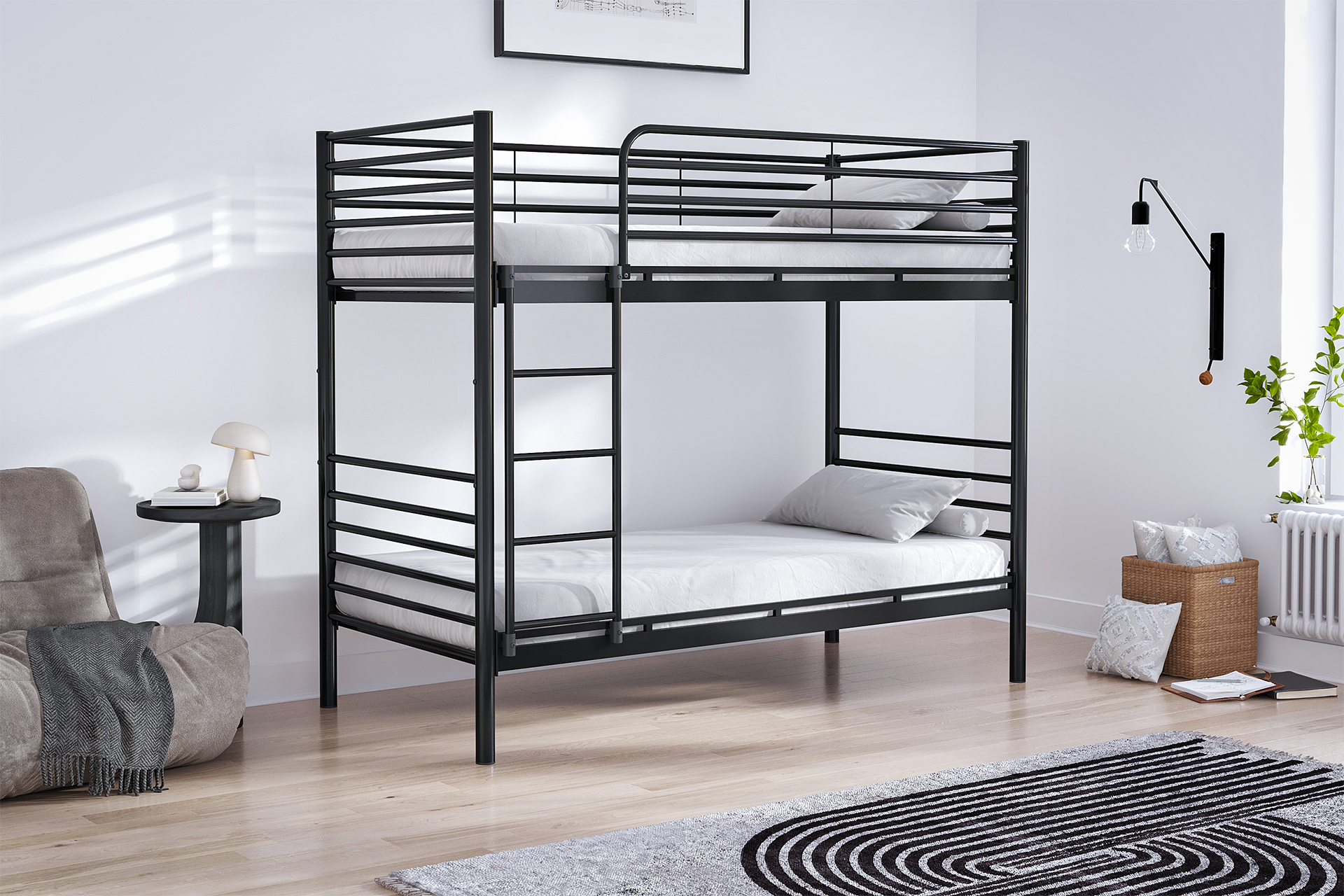 The N747 platform utilizes a dense wire mesh grid, providing the ultimate anti-sagging, friction-free foundation.
5. Breaking the Acoustic Myth: Wood vs. Metal
A common misconception in procurement is that wooden frames are naturally quieter than metallic ones. While wood has acoustic dampening properties, it is an organic material that shrinks, warps, and expands based on indoor humidity. Over a few short years, the wooden joints loosen, and the planks begin to groan under pressure. Additionally, porous wood is the ideal nesting ground for bed bugs.
Modern hybrid platforms shatter this myth by combining the best of both materials. By wrapping an indestructible, silent steel chassis with 18mm chipboard (Sunta) panels, models like the Yurt and Woodex offer boutique hotel aesthetics alongside commercial endurance. The wood panels act as external sound baffles, absorbing ambient room noise, while the internal steel skeleton handles the extreme physical loads without a single creak.
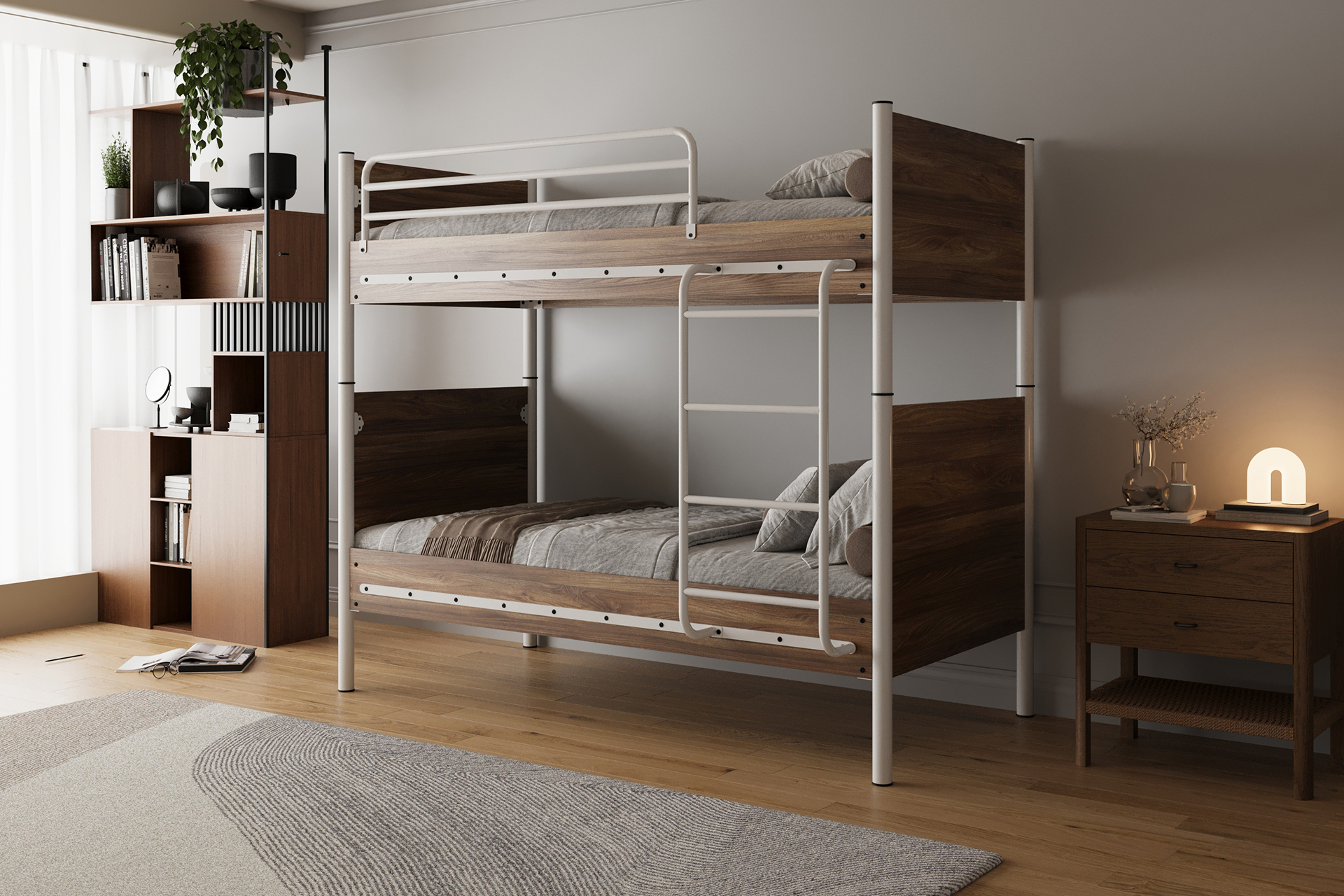 The Woodex single platform utilizes a 5mm solid metal bar behind its wood panels, completely stopping downward deflection and friction.
6. Procurement Strategy: Investing in Quiet
Acquiring hundreds of premium, acoustic-grade sleeping platforms requires strategic financial planning. Bypassing secondary vendors and purchasing directly from an automated factory guarantees that organizations receive the highest quality engineering at the lowest possible per-unit cost.
Furthermore, an experienced global supplier will utilize extreme flat-pack logistics. Because the acoustic knockdown slats and modular pillars are demountable, they can be compressed tightly into heavy-duty cartons. Securing a massive wholesale agreement allows institutions to fit up to 200 units inside a single shipping container. This hyper-volume optimization slashes international maritime freight expenses, allowing administrators to invest heavily in premium acoustic features rather than wasting capital on shipping empty air.
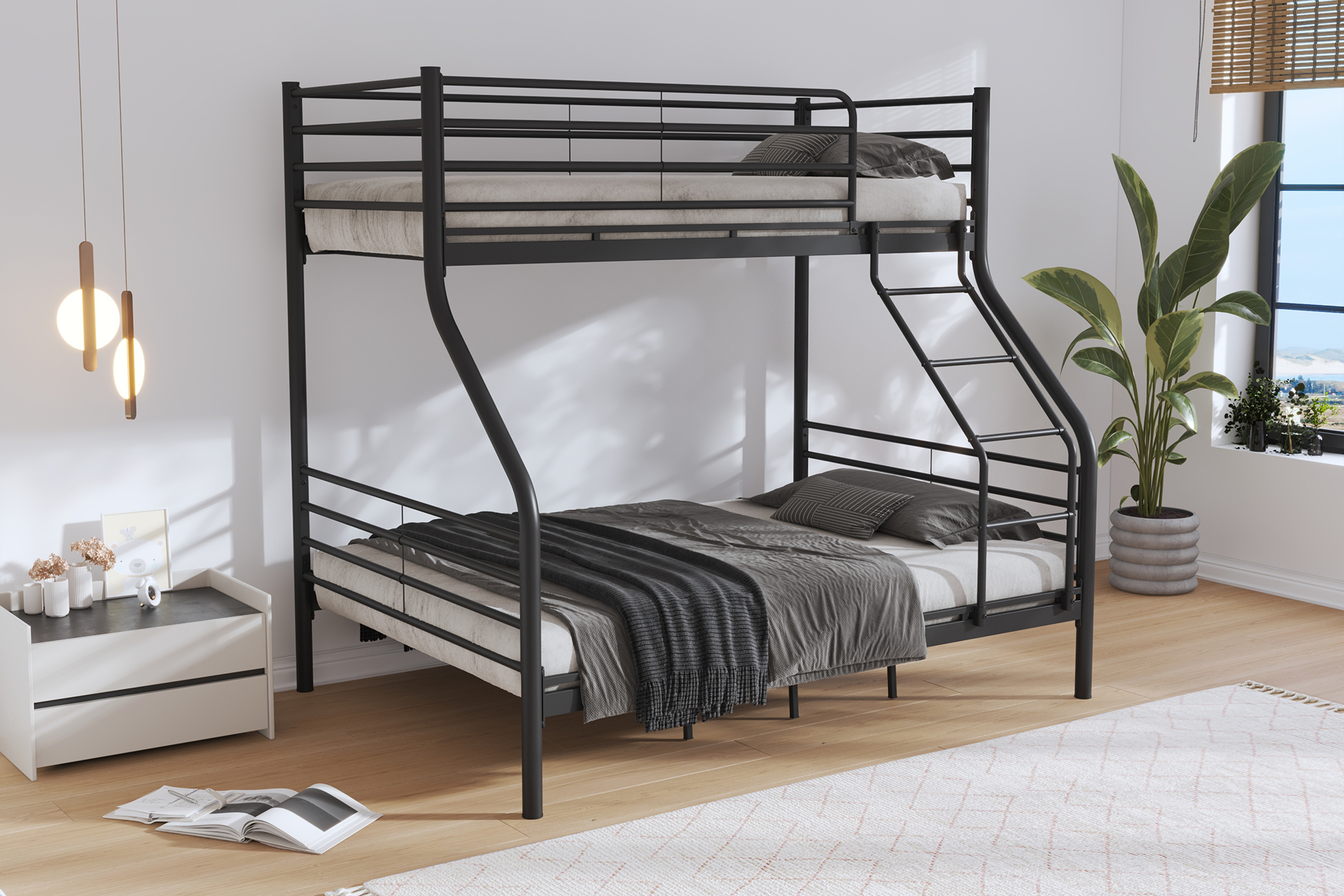 The Toronto's expanded 140cm bottom tier utilizes ultra-thick 20x30mm slats to eliminate mattress sagging under dual adult weight.
Frequently Asked Procurement Questions
Are you a direct producer of these acoustic systems?
Yes. By bypassing middlemen entirely, we maintain strict quality control over every polymer cap and steel profile, ensuring absolute silence for your residential projects.
How does your factory manage mass volume orders?
Our 20,000 M2 automated facility features robotic welding and laser cutting, allowing us to seamlessly output 15,000 units monthly without compromising acoustic tolerances.
Can an international supplier deliver these silently globally?
Absolutely. Through advanced flat-pack packaging, we compress the components safely into high-density cartons, ensuring flawless, damage-free maritime delivery worldwide.
Is the acoustic hardware included in a wholesale purchase?
Yes. Every bulk contract includes the essential noise-reducing plastic caps and heavy-gauge orthopedic slats required to guarantee a squeak-free commercial environment.
Why is eliminating noise critical for dense student housing?
High-density living causes rapid sound transfer. A quiet, friction-free sleeping platform ensures that residents can achieve deep REM sleep, which is critical for academic and physical performance.
Are these layouts suitable for a boutique inn or guest house?
Yes, the space-saving designs coupled with acoustic wood panels are perfect for dense housing, offering premium, stylish, and silent accommodations to international travelers.
Is the structure safe for high-risk institutional deployments?
Yes. The heavy-gauge alloys and threaded mechanical joints provide immense tamper-proof resilience, making them ideal for secure buildings that require monolithic stability.
Does the foundation prevent mattress sagging?
Absolutely. Whether utilizing heavy 20x30mm slats or dense wire mesh, the rigid foundation prevents the foam from sinking, offering flawless orthopedic support for resting adults.